Save Afterschool NYC · DYCD COMPASS/SONYC
Community afterschool programs were taken from schools — and the City still has not shown the record.
For nearly a decade or more, many public schools relied on trusted community-based organizations to run afterschool. DYCD rebid the contracts, removed long-rooted providers from dozens of schools, and in District 2 alone changed 12 Manhattan Youth programs — disrupting an interconnected afterschool ecosystem families had built their lives around.
The contradiction
DYCD cited goals like provider diversity, while many schools saw community-rooted organizations replaced by larger citywide providers.
The concern is not that large providers are automatically bad. The concern is that DYCD has not released the school-specific record showing why rooted community providers with years of relationships, staff continuity, and strong evaluations were replaced by organizations that may not have the same local history with those schools.
New here? Start here.
What happened?
For years — often close to a decade, more than a decade, or even longer — local community-based organizations operated afterschool programs inside NYC public schools.
These were not temporary vendors. They became part of each school’s ecosystem.
Students built relationships with site directors, coaches, teaching artists, debate mentors, theater directors, tutors, and group leaders. Parents planned work lives around these programs. Schools developed sports teams, theater productions, debate clubs, music, STEM, tutoring, enrichment, late-pickup routines, and disability supports that evolved over years.
Some incumbent sites had consistently strong monitoring and evaluation histories while serving their school communities. If DYCD disagrees, it should release the site-specific performance record.
Then DYCD rebid the COMPASS/SONYC contracts.
Instead of continuing many long-established school partnerships, DYCD awarded new six-year contracts to new providers across dozens of schools. In Manhattan’s District 2, one of the largest disruptions was the removal of Manhattan Youth from 12 school-based programs — a change families experienced not as isolated contract changes, but as the dismantling of an entire districtwide afterschool ecosystem.
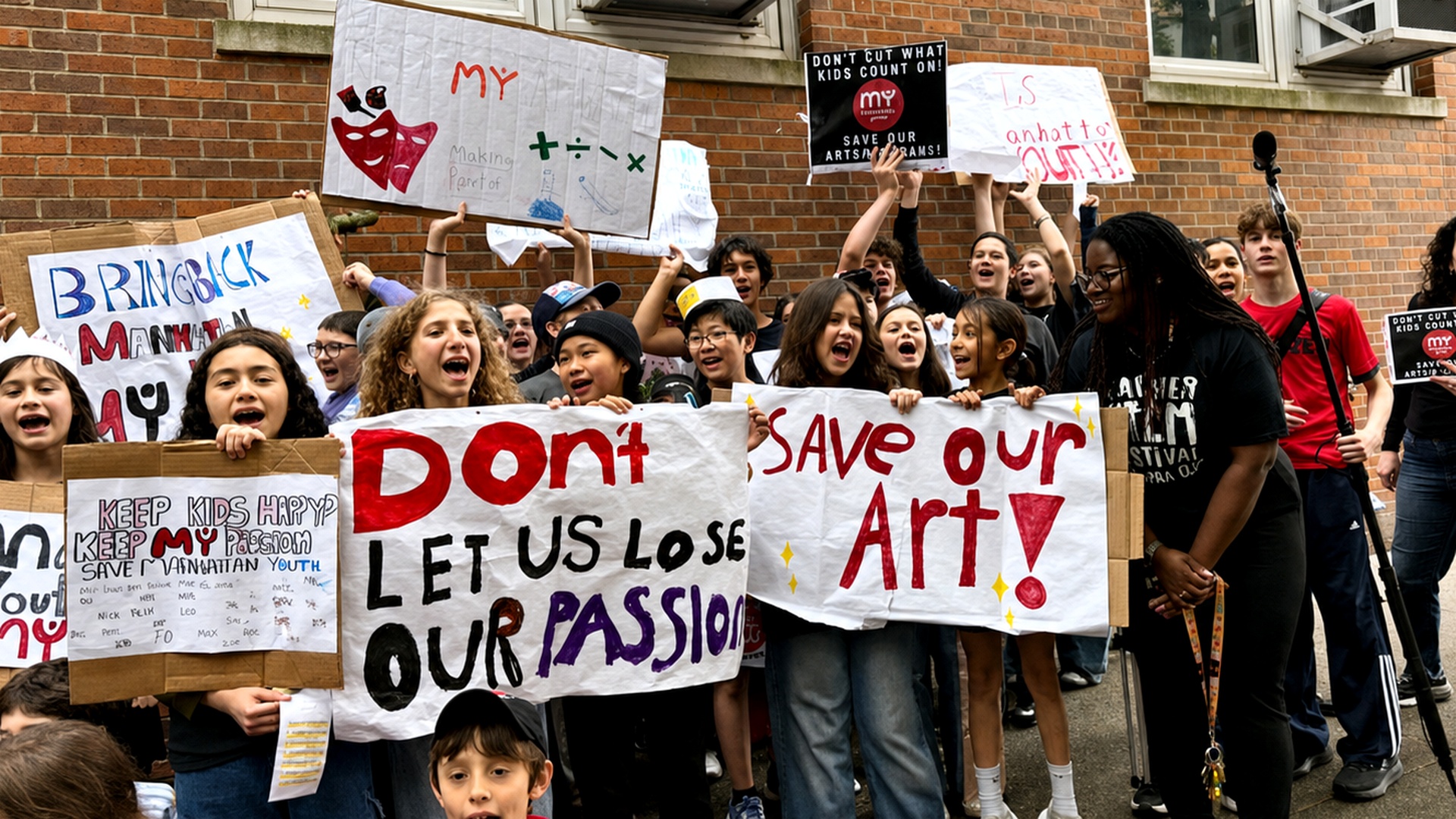
Children were not crying because of procurement.
They were crying because adults, teams, routines, clubs, mentors, and communities they trusted were suddenly at risk.
The real story: community roots vs. portfolio procurement
This is the part many first-time visitors miss. The controversy is not just that providers changed. It is that long-rooted community organizations were removed from school communities while DYCD used broad procurement language like “provider diversity” and “distribution.”
Before
Community-rooted providers
Local organizations built school-specific ecosystems over years.
- Known site directors and staff
- Sports, theater, debate, arts, clubs
- Trusted family communication
- Student-specific routines and supports
- Disability access built through relationships
- Strong monitoring/evaluation histories at some sites
After
Larger providers and new assignments
Many schools were assigned organizations without the same school-specific history.
- YMCA/YWCA affiliates at some schools
- NYJTL at some schools
- New York Edge and other larger providers elsewhere
- New staff and routines
- Unclear transition plans
- Missing school-specific rationale
If “provider diversity” was the reason, define it.
Families are asking DYCD to explain how replacing long-standing community-based providers with larger organizations advances provider diversity, school fit, or community development — and to release the school-by-school record showing how that factor was applied.
What exactly changed?
This is the basic before-and-after story every parent, reporter, elected official, and reviewer needs to understand.
| Before | After |
|---|---|
| Many schools had established afterschool providers for nearly a decade or longer. | Many schools were assigned new providers through the 2026 COMPASS/SONYC procurement. |
| Families chose schools knowing these afterschool ecosystems existed. | Families learned that providers, staff, routines, and programs could change after school decisions were already made. |
| Students relied on trusted adults, coaches, teaching artists, mentors, and site directors. | Schools may face new staff, new routines, new communication systems, and unclear transition planning. |
| Some incumbent providers and sites had strong evaluation histories and community support. | DYCD has not publicly released the school-specific performance record explaining why specific providers were replaced. |
| Programs were built around school-specific culture, student needs, schedules, sports, arts, clubs, and disability supports. | The public has not seen the school-specific transition plans proving those programs and supports will continue. |
This is not about preserving the status quo everywhere.
Some programs needed improvement, and some provider changes may have been appropriate. The question is whether each individual school received the provider that best fit its community — and whether DYCD can produce the school-specific record supporting those decisions.
Who was affected?
The campaign is tracking affected schools, displaced providers, school-community opposition, provider changes, and leads still being verified.
Districtwide disruption
The Manhattan Youth changes affected not only individual schools, but a connected ecosystem of sports, staff, arts, debate, enrichment, and family routines across the district.
Not only Manhattan
Families and providers in Queens, the Bronx, Brooklyn, and Staten Island have also reported disruptions, provider losses, or unresolved transition questions.
DYCD has the full list
Only DYCD can release the complete incumbent-to-awardee crosswalk, no-award sites, scores, rankings, protest outcomes, and transition records.
Why parents are concerned
Afterschool is not just a contract. It is childcare, youth development, disability access, community trust, and working-family infrastructure.
Trusted adults
Children built relationships with staff who know their strengths, fears, routines, and needs.
Sports, arts, debate, theater
Families are worried about the loss of existing teams, clubs, enrichment, tutoring, late pickup, and school-specific programming.
IEP / 504 / autism / ADHD
Provider transitions can disrupt routines, known adults, de-escalation knowledge, communication, sensory supports, and meaningful access.
Childcare stability
Parents built work schedules and school decisions around existing afterschool systems.
Schools are not interchangeable
A competition-level proposal does not necessarily prove a provider is the best fit for a specific school community.
Missing record
Families have not seen the full school-by-school record explaining the award decisions and transition plans.
What records are families asking for?
The campaign’s central demand is simple: release the record before implementation.
| Record | Why it matters |
|---|---|
| Complete school-by-school crosswalk | Shows which provider served each school before and which provider was awarded next. |
| Proposal scores and evaluator notes | Shows why one provider won and another lost. |
| NYCPS advisor / school rankings | Shows whether school preference was followed or overridden. |
| Site-specific performance record | Shows whether strong existing programs were removed for documented reasons or portfolio allocation. |
| Vendor protest determinations | Shows how DYCD handled provider appeals. |
| Provider-diversity and capacity rationale | Shows whether DYCD used post-scoring discretion to cap or redistribute awards. |
| School Partnership Agreement status | Shows whether the assigned provider and school can actually partner. |
| Disability-access and transition plans | Shows how disabled children and disabled parents will be protected before programs change. |
| Workforce and program-continuity plans | Shows whether trusted staff and school-specific programming will be preserved or replaced. |
Where are we now?
The vendor appeal/protest phase is largely complete. The campaign is now focused on Comptroller registration review.
Current action: ask the Comptroller to require the complete record before registration.
Once contracts are registered and implementation begins, staff may be displaced, programs may be dismantled, and disability-access problems may become much harder to fix.
Explore the issue
Use the site as a roadmap. Start with what happened, then go deeper into the process, records, disability access, legal review, and action tools.
Application Process
How providers applied and what DYCD required.
Read page → 🏛️Award Process
Scoring, 70+ viability, NYCPS rankings, DYCD discretion, and contradictions.
Read page → 🗺️Roadmap
Where we are now and what happens next.
Read page → 🏫Schools & Providers
Track affected schools, displaced providers, and evidence tiers.
Read page → ♿Disability Access
Why inclusion requires real safeguards, not just titles and training.
Read page → ⚖️Article 78
How judicial review connects to the administrative record.
Read page → ✉️Letters to Send
Pre-filled emails for the Comptroller, DYCD, electeds, and more.
Take action → 📰Press
Fast facts, story angles, and media contact.
Open press kit → 📎Contact
Submit documents, tips, corrections, school stories, or disability concerns.
Contact us →